White Goods Recycle: Recycling & Sustainability
White Goods Recycle is committed to delivering large appliance recycling that balances environmental responsibility with practical local service. Our mission is to keep fridges, washing machines, ovens and other bulk appliances out of landfill, recovering valuable materials and enabling safe reuse where possible. We work across multiple boroughs and neighbourhoods to make responsible disposal straightforward and to support boroughs' approach to waste separation, including kerbside segregation and communal collection points.
Our Recycling Percentage Target
We have a clear, measurable goal: to achieve a 90% diversion rate for all collected white goods ??? meaning 90% of items will be reused, refurbished or processed for material recovery by 2030. An interim target of 80% by 2026 keeps our progress transparent and accountable. These targets apply across our appliance recycling programmes and the wider white-goods recycling network we operate with local transfer stations and partners.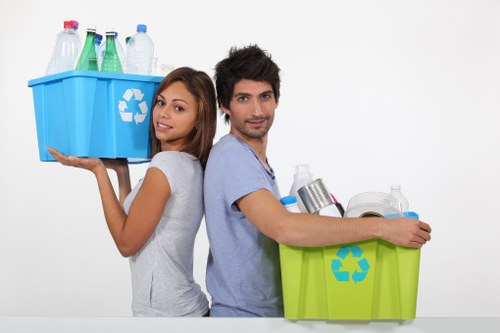
We support local transfer stations and borough transfer hubs as the backbone of efficient appliance collection. Our logistics link household pickups and small business collections to transfer stations where items are sorted, decontaminated and routed for reuse, parts recovery or metal and plastic recycling. Typical transfer station processes include:
- Initial safety checks and hazardous component removal
- Separation of reusable units for refurbishment
- Material recovery for steel, copper, aluminium and polymers
Low-Carbon Vans and a Greener Fleet
Our sustainable fleet is a visible commitment to reducing emissions from white-goods collection. We operate a mix of electric vans and low-emission hybrids for inner-borough routes and efficient diesel alternatives for longer runs while transitioning. The fleet plan is to reach 100% low-carbon vehicles in urban collection zones by 2028, cutting transport-related emissions and improving air quality in borough centres.![Two large wheeled rubbish bins placed side by side on a paved driveway in front of a neatly trimmed green hedge. The left bin is bright yellow with a black lid, while the right bin is green with a black lid. Both bins appear to be made of durable plastic with a smooth, glossy finish. The yellow bin is slightly taller and positioned closer to the hedge, with the lid closed and a black handle visible on the front. The green bin is positioned on the right, also with its lid closed. The driveway surface beneath the bins is light grey with visible joints, and the setting suggests a residential area, potentially serving a property in a location like White Goods Recycle’s service area near [POSTCODE] or [TOWN], providing rubbish disposal or recycling services in the local community.](/pub/_photos/rubbish/f1350785184.jpg)
Partnerships with Charities and Social Enterprises
We partner with local charities and community organisations to maximise reuse. Through vetted charity partners, fully functional appliances are cleaned, safety-tested and offered to families in need or to social housing programmes. Our collaborations support job training with social enterprises that teach appliance repair skills, expanding the circular economy while delivering social value in the same boroughs where we operate.Our white-goods recycling approach includes careful data security on appliances with electronic controls, responsible disposal of refrigerants and oils, and sourcing second-life parts for repair. The combination of appliance recycling and targeted refurbishment reduces the need for raw material extraction and supports local circular supply chains.
We work closely with municipal waste teams so that our operations complement boroughs' waste separation strategies. Where borough policy favours separated streams???metal, plastics, and hazardous components???we adapt pickup and handover procedures at transfer stations to match. This cooperative approach helps councils reach their municipal recycling targets and improves the efficiency of the large appliance recycling chain.
![A pink ceramic teacup-shaped planter with a small handle on its side, positioned on a matching pink saucer, is filled with various small, green succulent plants, including a spiky aloe and a trailing string of pearls. The planter has a glossy finish and is placed on a weathered wooden surface, likely outdoors or in a rustic indoor setting, with sunlight casting soft shadows around it. The background shows a blurred view of a wooden window frame, indicating a domestic environment. The arrangement of succulents contrasts with the smooth, shiny texture of the ceramic, highlighting their diverse shapes and textures. This image, which could be associated with home decor or garden accessories, subtly complements the context of waste management and recycling by emphasizing sustainable, decorative plant choices, aligning with environmentally conscious practices promoted by a waste removal service such as White Goods Recycle in local areas like [POSTCODE] or [TOWN].](/pub/_photos/rubbish/top10thingstoreuseandrecycle4.jpg)
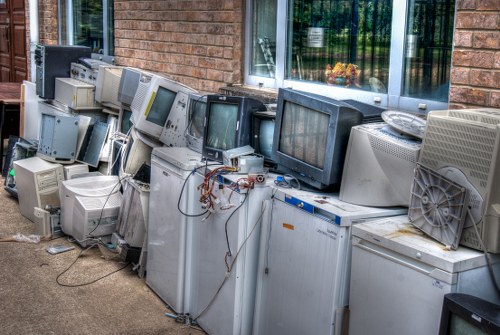
How we process collected appliances: items received at transfer stations go through a standardised route: pre-screening, safe hazardous component extraction (such as CFCs from fridges), parts salvage and material separation. Reusable machines are prepared for the resale or donation network; non-repairable units are dismantled so metals and polymers can be sorted for industrial recycling. This systematic processing is central to our pledge to high recycling percentage targets.
Community engagement is part of the sustainability plan. We hold local collection days in collaboration with borough councils and community centres, and we provide clear guidance on what counts as large appliance waste versus household recyclable items. By aligning with local waste calendars and communal point systems, our white-goods collection reduces contamination and increases the recovery rate for recyclable materials.
Transparency and reporting are integral. We publish annual summaries of volumes collected, percentage diverted from landfill, and progress toward our 90% target. Data on the number of appliances refurbished versus recycled helps stakeholders understand the real benefits of appliance recycling in the area and track improvements over time.
Our ambition is to scale the model across more boroughs, integrating with transfer stations, charities and repair social enterprises to create resilient local loops for white-goods recycle activities. By combining a low-carbon fleet, clear recycling percentage targets, and collaborative community partnerships, we aim to make sustainable appliance disposal the norm rather than the exception.
White goods recycling, white-goods recycle programmes and appliance recycling initiatives form the practical steps we take every day to reduce waste, save resources and support vulnerable households. Strong partnerships, thoughtful logistics and measurable targets are how we turn the environmental promise of circular economy principles into local, measurable outcomes.